

Social media can be a great way for businesses to stay connected with existing customers and reach new people.
But one common question many business owners have is:
"How often should I post?"
Should you post every day? A few times a week? Only when you have something to promote?
The answer isn't the same for every business.
What matters most is having a posting routine that you can maintain while continuing to share content that is useful and relevant to your audience.
01 / Consistency Matters More Than Posting Every Day
You don't necessarily need to post every day to have a strong social media presence.
Posting once a day may work for some businesses, while another business may get better results by posting three or four times a week.
The important thing is consistency.
For example, posting three useful posts every week is generally better than posting ten times one week and then disappearing for an entire month.
Choose a schedule that your business can realistically maintain.
02 / Start With a Simple Posting Schedule
If you're not posting consistently right now, don't try to create a complicated content plan immediately.
Start with a simple routine.
For example:
- Monday — Helpful Tip
Share a useful tip related to your product or service. - Wednesday — Your Work
Show a product, completed project, service, or customer experience. - Friday — Promotional Content
Share an offer, service, event, product, or business update.
That's already three pieces of content every week.
Once you become comfortable with this routine, you can expand it.
03 / Different Businesses Need Different Posting Frequencies
There isn't one perfect posting frequency for every business.
A restaurant may have plenty of content to share because it can regularly showcase food, offers, events, and customer experiences.
A professional service business may have fewer things to post and may focus more on educational content. For example:
Restaurant
Could post several times a week about:
- Food
- New dishes
- Offers
- Events
- Customer experiences
Healthcare Business
Could focus on:
- Health tips
- Services
- Doctor introductions
- Awareness content
- FAQs
Real Estate Business
Could share:
- Property listings
- Market information
- Project updates
- Home-buying tips
Digital Agency
Could post:
- Marketing tips
- Website advice
- Client work
- SEO information
- Branding ideas
Your posting schedule should match your business and the amount of useful content you can create.
04 / Focus on Quality, Not Just Quantity
Posting more doesn't automatically mean getting better results.
If your posts are repetitive, unclear, or don't provide value, posting more frequently won't solve the problem.
Before publishing something, ask:
- Is this useful to my audience?
- Does it represent my business properly?
- Does it give people a reason to stop and read?
- Does it support my business goal?
A smaller number of good posts can be more valuable than a large number of low-quality posts.
05 / Don't Make Every Post an Advertisement
One of the easiest ways to make your social media boring is to constantly sell.
If every post says:
- "Buy now."
- "Contact us today."
- "Get our service."
people may stop paying attention. Instead, create a mix of content.
Educational Content
Help people learn something. Examples:
- Tips
- Guides
- FAQs
- Industry information
Promotional Content
Tell people about your products or services. Examples:
- Offers
- Discounts
- New launches
- Packages
Engagement Content
Give people a reason to interact. Examples:
- Questions
- Polls
- Simple discussions
- Customer opinions
Brand Content
Show the people and story behind your business. Examples:
- Team introductions
- Behind-the-scenes content
- Business milestones
- Company updates
A balanced content mix keeps your social media presence more interesting.
06 / Create Content Around Your Customers' Questions
If you're constantly wondering what to post, start with your customers.
Think about the questions they ask before buying your product or service.
For example, a website development company might get questions like:
- How much does a website cost?
- How long does website development take?
- Do I need a website for my small business?
- Will my website work on mobile?
- Can I update the website myself?
Each question can become a social media post.
This gives you a simple source of content while also helping potential customers.
07 / Reuse Good Content
You don't have to create something completely new every time you post.
A useful piece of content can be repurposed into different formats.
For example, one blog article can become:
- An Instagram carousel
- A short video
- A single-image post
- A LinkedIn post
- A Story
- A series of smaller tips
This makes content creation easier and allows you to reach people who prefer different types of content.
08 / Plan Your Content in Advance
Creating every post at the last minute can become stressful.
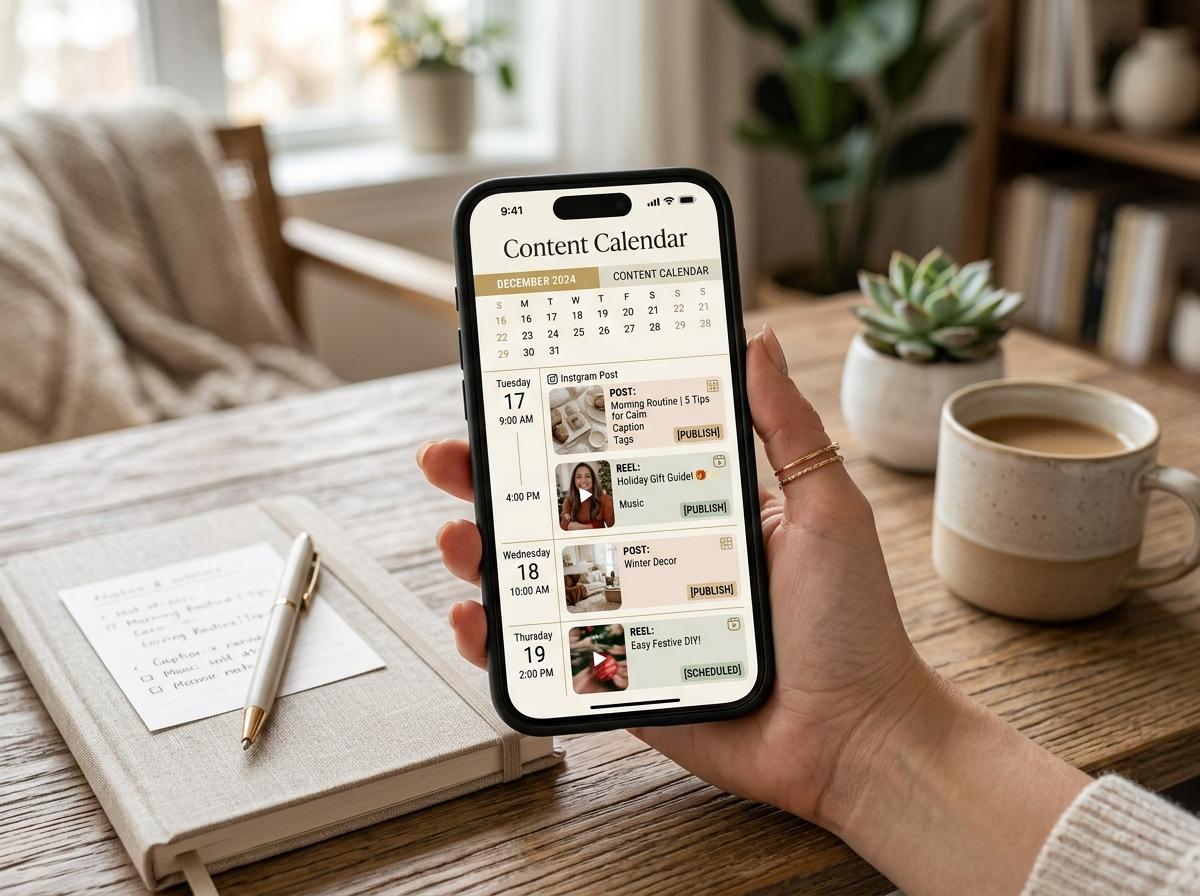
Instead, try planning your content for the next week or month. Create a simple content calendar with:
| Day | Content Type | Topic |
|---|---|---|
| Monday | Educational | Business tip |
| Wednesday | Work | Recent project |
| Friday | Promotional | Service or offer |
| Sunday | Engagement | Customer question |
You don't need an elaborate system.
Even a simple spreadsheet or calendar can help you stay organized.
09 / Use a Content Bank
Sometimes you may have plenty of ideas but forget them when it's time to post.
Create a simple list of content ideas whenever you think of something.
Your content bank could include:
- Customer questions
- FAQs
- Tips
- Previous projects
- Product features
- Offers
- Testimonials
- Industry news
- Behind-the-scenes ideas
- Seasonal content
When you don't know what to post, you can simply choose an idea from your list.
10 / Use Different Content Formats
Social media isn't limited to single-image posts.
Depending on the platform, you can experiment with:
- Images
- Carousels
- Reels
- Videos
- Stories
- Testimonials
- Infographics
- Polls
- Short educational posts
Different formats can help you communicate different types of information.
For example, a quick tip may work well as a short video, while a detailed list may work better as a carousel.
11 / Don't Forget About Local and Seasonal Content
Local businesses can also create content around events, seasons, and important dates.
For example:
- Festival offers
- Local events
- Seasonal products
- Holiday greetings
- Special business announcements
- Local customer stories
This can make your content feel more relevant to the people you actually want to reach.
12 / Track What Works
You don't have to guess whether your content is working.
Look at your social media insights regularly.
Pay attention to:
- Reach
- Engagement
- Shares
- Saves
- Comments
- Profile visits
- Website clicks
- Enquiries
If certain types of content consistently perform better, create more content around those topics.
For example, if educational carousels get more saves and shares than promotional posts, you may want to increase educational content.
13 / Don't Stop Because One Post Performs Poorly
Not every post will perform well.
One post may receive hundreds of views while another gets very little attention.
That's normal.
Social media performance can change depending on the topic, format, audience, timing, and other factors.
Instead of judging your entire strategy based on one post, look at your results over a longer period.
The goal is to understand what works and gradually improve.
14 / A Simple Weekly Plan for Small Businesses
If you're just starting, here's a simple weekly structure you can follow:
Monday — Educate
Share a useful tip or answer a common customer question.
Tuesday — Brand
Show your business, team, workplace, or story.
Wednesday — Showcase
Show a product, service, project, or previous work.
Thursday — Engage
Ask your audience a question or share something they can interact with.
Friday — Promote
Highlight a product, service, offer, or upcoming event.
Weekend — Optional
Share lighter content, behind-the-scenes content, customer experiences, or seasonal posts.
You don't have to follow this exact schedule.
Use it as a starting point and adjust it based on your business.
So, How Often Should You Post?
For many small businesses, 3–5 useful posts per week can be a practical starting point.
But the exact number isn't what matters most.
A business that consistently creates three good posts every week can have a stronger presence than a business that posts seven times one week and then stops for several weeks.
Focus on creating a routine you can actually maintain.
Final Thoughts
Social media doesn't have to become a daily struggle.
You don't need to constantly search for new ideas or post just for the sake of posting.
Start with a simple schedule.
Understand your customers.
Create content around their questions and interests.
Show your products, services, and work.
Mix educational, promotional, engagement, and brand content.
Most importantly, stay consistent.
Good social media isn't about posting more. It's about posting with purpose.

Need Help Managing Your
Business Content?

Let's create a content plan that works for your business.
Talk to Us